Disclosure: ClosetBlueprint is reader-supported. When you buy through links on our site, we may earn an affiliate commission at no extra cost to you. Learn more.
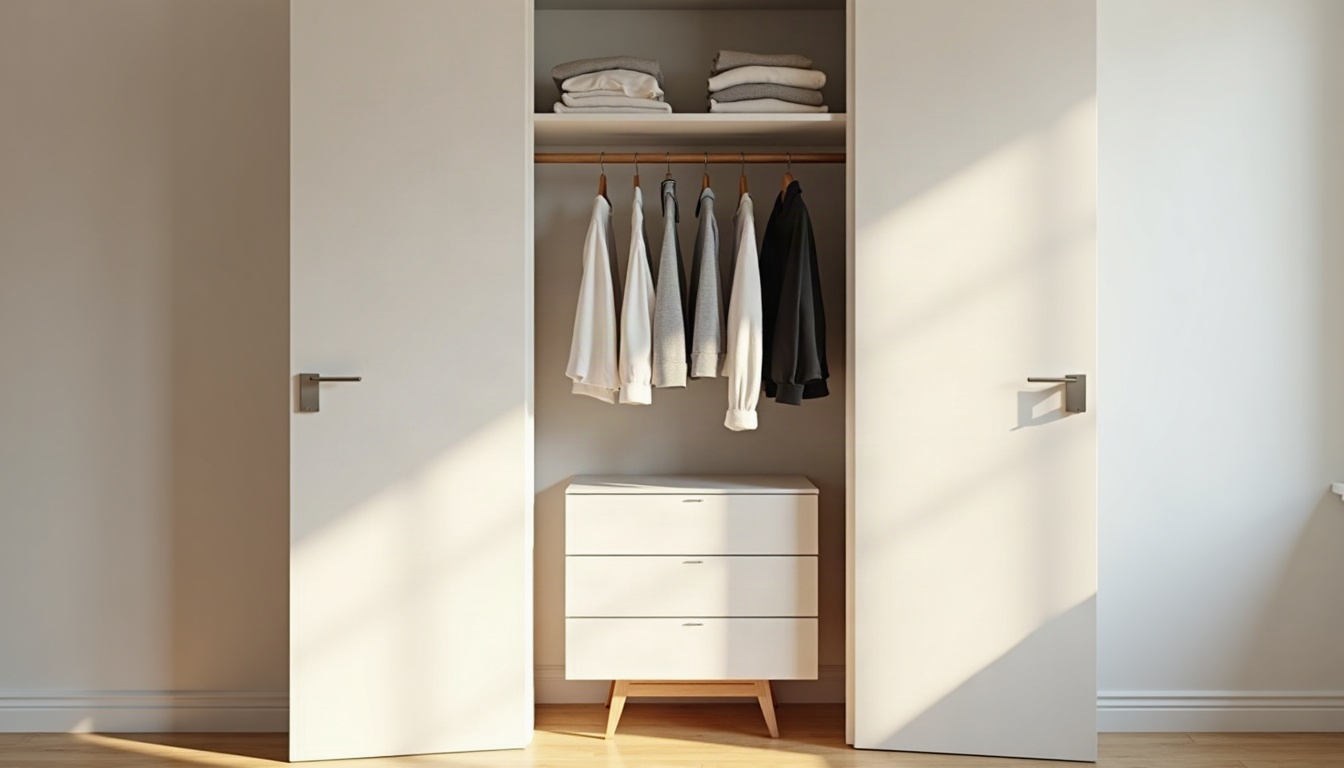
A dresser fits in most standard closets if you size it to the closet rather than to the bedroom. In a typical 24 inch deep reach-in, look for a dresser 16 to 18 inches deep. Put it under short hanging clothes only if you have at least 40 inches of clear space between the floor and the bottom of the hems. Then check two clearances that people forget: the drawers have to open fully inside the door opening, and the closet door has to clear the dresser.
Below are the measurements to take, a size table for each type of closet, six ways to fit a dresser in a closet, and how to anchor it so it can’t tip. If you’d rather see it on your own wall first, our free closet design tool takes your width, height and depth and lays out hanging, shelves and drawers.
In this guide
Measure these four things first
A dresser that looked small in the store can block half a closet. Take these measurements before you shop, and write them down with the door open:
- Closet depth. Measure from the back wall to the inside edge of the door frame. Most reach-ins are about 24 inches; our reach-in closet dimensions guide covers shallow and deep ones.
- Clear height under the clothes. Measure from the floor to the bottom of the clothes that will hang above the dresser, not to the rod. Shirts on a lower rod at 40 inches leave almost nothing. Shirts on a single rod at about 66 inches usually leave 30 inches or more.
- Door opening width. This is the width you can actually reach. The closet behind it is often wider, and a dresser tucked behind the wall at either side of the opening (the “return”) can’t open its drawers.
- Door type and swing. Hinged doors swing out into the room, bifold doors fold into the opening, and sliding doors only ever open half the closet at a time. Each one limits the dresser differently.
Also note the baseboard. It pushes the dresser about half an inch to an inch away from the back wall, which matters when you only have a few inches to spare.
What size dresser fits in a closet
These are planning numbers, not product specs. Dimensions vary a lot by model, so check the listing for the exact height, width and depth, and compare it with your own measurements.
| Closet type | Max dresser depth | Max height | Width | Notes |
|---|---|---|---|---|
| Standard reach-in, 24 in deep | 16–18 in | 2–4 in below the hems above it | Inside the door opening, with 1–2 in to spare | The most common fit; leaves 6–8 in in front for the door and clothes |
| Shallow reach-in, 20–22 in deep | 12–15 in | Same rule | Inside the door opening | Look for a narrow dresser or fabric drawers about 12 in deep |
| Reach-in with sliding doors | 16–18 in | Same rule | No wider than one door’s opening | Otherwise one door always covers part of the drawers |
| Reach-in with bifold doors | 16–18 in | Same rule | Opening minus the folded panels | Open the bifolds fully and measure the clear gap between them |
| Deep reach-in, 28–48 in | 18–20 in | Same rule | Inside the door opening | Room for a standard-depth dresser on the floor in front of the hanging |
| Small walk-in | 16–20 in | Waist height, 30–40 in, if it’s a folding surface | Fits the wall, with a 36 in aisle in front | Back wall is usually the best spot |
For reference, small three- and four-drawer chests are commonly around 15 to 18 inches deep, 24 to 32 inches wide and 28 to 40 inches tall. Full-size bedroom dressers are often 18 to 20 inches deep and 50 inches wide or more, which rules most of them out for a reach-in. Fabric drawer dressers are usually shallower, often about 12 inches.

Check that the drawers can open
This is where most closet dressers fail. A drawer box is usually 2 to 3 inches shallower than the dresser, and you need to pull it most of the way out to reach the back.
Here’s the math for a common case. A 17 inch deep dresser against the back wall of a 24 inch closet sits with its front about 18 inches from the wall, counting the baseboard. A 14 inch drawer pulled out ends up about 32 inches from the back wall, or 8 inches past the door frame. That’s fine with an open hinged door. It isn’t fine if the dresser sits behind a return, behind the closed half of a sliding door, or behind a folded bifold panel. You also need room to stand in front of the closet while the drawer is open, so keep the floor in front clear for about 2 feet.
Handles count too. Knobs and pulls add an inch or so to the front, and they can catch on a door frame if the dresser sits right at the edge of the opening.
6 dresser in closet ideas that work
1. A low dresser under short hanging clothes
This is the classic small-closet fix. Hang shirts, blouses and folded-over pants on the rod, and slide a low dresser underneath. A rod at about 66 inches with shirts that hang about 36 to 40 inches leaves roughly 26 to 30 inches of clear height, enough for a low two- or three-drawer chest. If you raise the rod to 80 inches (the usual upper rod in a double hang), the clear space grows to about 40 inches, and a 30 to 36 inch dresser fits with room to spare. Our closet rod height guide has the standard numbers.
Long dresses and coats go elsewhere. Keep one section of the rod, about 18 to 24 inches wide, for long hang, and put the dresser under the rest.
2. Between two hanging sections
In a closet 6 feet wide or more, a dresser can split the space: long hang on one side, double hang on the other, drawers in the middle. Center the dresser on the door opening so the drawers are the easiest thing to reach, and stop the rods at the sides of the dresser, or run one shelf across the top of everything. The top of the dresser becomes a landing spot for a jewelry tray or the next day’s clothes.
3. A narrow drawer tower at one side
If the closet is only 3 to 4 feet wide, a full dresser takes too much rod. A narrow tower, about 12 to 20 inches wide, gives you drawers for socks, underwear and t-shirts and keeps most of the rod. Put it at one end of the door opening, not behind the return. Tall towers are the most likely to tip, so anchor them (see below).
4. A built-in dresser
A “built-in dresser” in a closet usually means one of two things. The first is drawer units from a closet system. Most system drawers are made to fit a standard 24 inch closet and mount to the same rails or panels as the shelves and rods, so they look built in and can’t tip. Elfa, ClosetMaid, Rubbermaid and laminate systems all offer them; see how they compare in our best reach-in closet systems guide.
The second is a regular dresser made to look built in. You pick a dresser that fills the width of the opening, then frame it with trim or filler panels on the sides and a shelf on top. It’s a popular DIY project, and it works best when the dresser fits within an inch or two of the walls. Measure carefully and leave enough gap at the sides for the drawers to slide without rubbing.
5. Fabric drawers for rentals and kids’ closets
Fabric drawer dressers with a metal frame are light, cheap and usually about 12 inches deep, so they fit shallow closets that a wood dresser won’t. They hold soft clothes well and sag under heavy jeans. Because they’re light, they tip easily when a child pulls on a drawer or climbs, so most come with a wall strap, and you should use it. Our kids’ closet ideas cover sizing for younger children.
6. A dresser on the back wall of a walk-in
In a small walk-in, the back wall facing the door is the easiest place for a dresser, because you face it straight on and the walkway ends there. A dresser up to about 20 inches deep works as long as you keep about 36 inches of floor in front of it. For more on that layout, see our walk-in closet ideas. If you’re weighing a dresser against an island, our guide to the walk-in closet with an island shows how much room each one needs.
Dressers and drawers that fit in a closet
As an Amazon Associate I earn from qualifying purchases.
Anchor it to the wall
Every dresser in a closet should be anchored, including low ones. A dresser that’s fine on its own can tip when a heavy drawer is pulled out all the way, and closets make it worse because people tend to pull top drawers out further to see inside. Children climbing on open drawers are the classic tip-over case.
In the U.S., dressers and other clothing storage units made since September 1, 2023 must meet a mandatory CPSC stability standard (ASTM F2057-23, adopted under the STURDY Act) and come with an anti-tip device, according to the CPSC. Older dressers, secondhand ones and many fabric units may not have one. A separate anti-tip kit costs little and takes about 15 minutes to fit.
- Screw into a stud if you can. A stud finder makes this quick. In drywall without a stud, use the hollow-wall anchors rated for it, not the plastic plugs that come in the box.
- Attach to the dresser’s frame, not to a thin back panel.
- Keep heavy things low. Put jeans and sweaters in the bottom drawers and light things up top.
- Don’t put a TV or heavy box on top, even with an anchor.
Example: a 60 inch reach-in with sliding doors
Say your closet is 60 inches wide and 24 inches deep, with two sliding doors. Each door covers about half the opening, so with one door open you can reach about 28 to 30 inches of closet at a time.
- Left half: long hang on a rod at about 68 inches for dresses and coats. Shoes on the floor below.
- Right half: a rod raised to about 80 inches for shirts, with a dresser no wider than about 26 inches and 16 to 17 inches deep underneath. A 30 to 34 inch tall chest leaves a few inches below the hems.
- Above: one shelf at about 84 inches across both sides for bins and off-season clothes.
The dresser fits entirely behind one door, so its drawers open fully whenever that side is open. If the dresser were 36 inches wide, part of it would always be behind the other door, and the drawers would only open partway.
For more ways to use a small closet, read our small bedroom closet ideas. If the bedroom has no closet at all, a freestanding wardrobe with a dresser beside it is usually the better plan.
FAQ
Can you put a dresser in a closet?
Yes, as long as it’s shallow enough for the closet, sits inside the door opening and has room for its drawers to open. In a standard 24 inch deep reach-in, a dresser 16 to 18 inches deep is the usual fit. It frees floor space in the bedroom, which is why it’s popular in small rooms.
How deep should a dresser be to fit in a closet?
About 16 to 18 inches for a 24 inch deep closet, and about 12 to 15 inches for a shallow 20 to 22 inch closet. That leaves several inches in front for the door and the clothes hanging above, and room for the baseboard behind.
How tall can a dresser be under hanging clothes?
Measure from the floor to the bottom of the hems and subtract 2 to 4 inches. Under shirts on a rod at about 80 inches, that’s usually a 30 to 36 inch dresser. Under a single rod at about 66 inches, it’s often closer to 22 to 28 inches.
What is a good small dresser for a closet?
A three- or four-drawer chest about 16 to 18 inches deep and narrow enough to sit inside your door opening. For shallow closets or rentals, fabric drawer dressers about 12 inches deep work. If you’re installing a closet system anyway, its own drawer units fit best.
Do I need to anchor a dresser inside a closet?
Yes. Being in a closet doesn’t stop a dresser from tipping when drawers are pulled out. Anchor it to a stud with an anti-tip kit, and keep heavy clothes in the bottom drawers.
Is a dresser or closet drawers better?
Closet system drawers fit the space exactly, mount to the wall and can’t tip, but they cost more and are tied to the system. A freestanding dresser is cheaper and moves with you. In a rental or a closet you’re not remodeling, a dresser is usually the practical choice.
The bottom line
A dresser in a closet works when you measure the closet first: 16 to 18 inches deep for a standard 24 inch reach-in, a few inches lower than the hems above it, and no wider than the part of the opening you can actually reach. Check that the drawers open past the door, then anchor the dresser to the wall. To try the layout before you buy, plug your measurements into our free closet design tool.
Shop the look on Amazon