Disclosure: ClosetBlueprint is reader-supported. When you buy through links on our site, we may earn an affiliate commission at no extra cost to you. Learn more.
A kids’ closet has a problem adult closets do not: the person using it keeps changing size. The rod that works for a toddler is useless for a ten-year-old, and the bins full of toys eventually become bins full of sports gear. The best kids’ closets are built to adjust, so you can reorganize in an afternoon instead of starting over every few years.
Below are practical ideas for every stage, from nursery to teen, plus the safety basics every parent should know. This guide is based on common closet design practice and published safety guidance, not on sponsored placements.

Principles of a closet that grows with your child
- Adjustable over fixed. Rods, shelves and drawers that can move up as your child grows will outlast anything built at one height.
- Reachable means usable. Kids put things away when they can reach them. Keep everyday items low and adult-only items high.
- Simple categories. A few big, clearly labeled bins work better for kids than many small compartments.
- Safety first. Anything tall or heavy gets anchored to the wall.
1. Use adjustable or double rods
Most kids’ clothes are short, so a single adult-height rod wastes a lot of space. Two rods, one high and one low, are the backbone of a kids’ closet:
- Lower rod: everyday clothes your child can reach and choose from.
- Upper rod: special-occasion clothes, the next size up, or items you want to control.
A track-based system (where shelves and rods hang from vertical standards) or any system with adjustable rod brackets lets you raise the lower rod as your child grows. If you can’t drill, a rod doubler that hooks over the existing rod is an easy temporary option. Our guide to the best closet systems explains which systems are easiest to reconfigure.
Tip: set the lower rod at a height your child can reach without stretching or climbing, and check it again each year.
2. Shelves and bins at kid height
Open shelves with bins are easier for young kids than drawers. Bins can be pulled out, filled and pushed back without much precision.
- Choose lightweight fabric or plastic bins with handles.
- Avoid bins with heavy lids that could pinch fingers.
- Keep the heaviest items on the lowest shelves.
- Measure shelf depth and the height between shelves before buying bins. Our measuring guide shows how.
3. Label with pictures
Pre-readers can’t use word labels, but they can match pictures. Tape or clip a simple photo or drawing to each bin: socks, pajamas, shirts, pants, shoes. As your child learns to read, add words next to the picture, and later switch to word labels only. Bins with built-in label holders make this easy to update.
4. Use the floor and the door
- Floor: a low shoe rack or a couple of large bins for shoes and toys.
- Door: an over-the-door organizer with clear pockets for accessories, hair supplies, small toys or art materials. Hang the pockets your child uses at the bottom.
- Hooks: low hooks for backpacks, jackets and tomorrow’s outfit.
Kids’ closet ideas by age
| Age stage | What changes | Closet setup |
|---|---|---|
| Baby (0–2) | Parents do everything; lots of small items | Double rods (both adult-reach), shelves with bins by size, diapers and supplies within easy reach for the parent |
| Preschool (3–5) | Starts dressing alone; can’t read yet | Low rod for daily clothes, picture-labeled bins, low hooks, a shoe rack on the floor |
| School age (6–11) | More clothes, school gear, hobbies | Raise the lower rod, add a drawer unit or shelf tower, a spot for backpacks and sports gear, word labels |
| Tween/teen (12+) | Adult-size clothes, wants privacy and style | Mostly adult-height rods with a long-hang section, more shelves and drawers, a mirror and better lighting |
Babies and toddlers
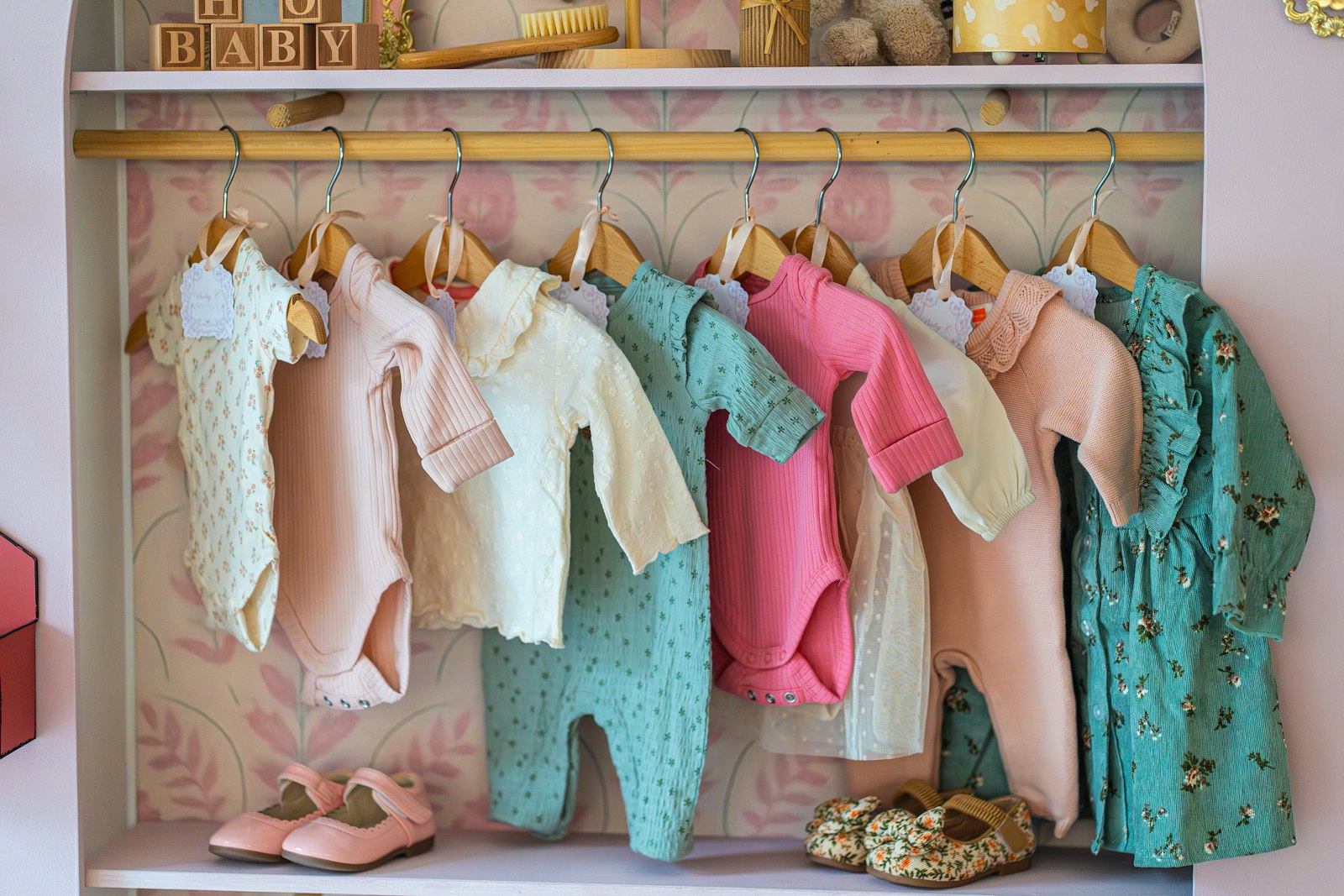
At this stage, the closet is really for the parent. Organize clothes by size, and keep the next size up in a labeled bin on a high shelf so you can swap quickly during growth spurts. Small items such as socks, bibs and hats go in bins or drawer dividers. Baby clothes are short, so two rods within your own reach can hold a lot.
Preschoolers
This is when kids start wanting to choose their own clothes. Move a small, edited selection of everyday clothes to the low rod and keep the rest higher. Picture labels, low hooks and a bin for pajamas help build the habit of putting things away.
School-age kids
Clothes get longer and more numerous, and the closet starts holding backpacks, sports gear and hobby supplies. Raise the lower rod, add drawers or a shelf tower for folded items, and give school things a dedicated spot near the door. This is a good time to involve your child in choosing categories.
Tweens and teens
By now, the closet looks much like an adult one. Add a single-hang section for longer items, more shelf space for folded clothes and shoes, and good lighting. Teens often care about how it looks, so this can be the moment to upgrade from wire to a laminate system. Our wire vs. laminate vs. wood guide compares the options.
Safety basics for kids’ closets
Anchor tall and heavy furniture
Dressers, bookcases, shelf towers and wardrobes can tip over if a child climbs on them or pulls out several drawers. The U.S. Consumer Product Safety Commission (CPSC) recommends anchoring furniture securely to the wall; its Anchor It campaign has guidance. In the US, new dressers and similar clothing storage units must meet a mandatory stability standard under the STURDY Act, but you should still use the anchoring hardware, and anchor older furniture too.
- Use the anti-tip kit that came with the furniture, or buy a furniture anchor kit.
- Screw into wall studs or use anchors rated for your wall type.
- Don’t put a TV or heavy items on top of a dresser in a child’s room.
- Keep the heaviest items in the bottom drawers.
Secure the closet system itself
Wall-mounted systems should be fastened into studs as the manufacturer instructs. Freestanding shelf towers and tall shoe racks should be anchored or kept short enough that a climbing child can’t pull them over.
Other quick checks
- Keep plastic dry-cleaning bags, cords and small items like button batteries out of reach.
- Store anything heavy or breakable on the top shelf only if it can’t fall when a bin below is pulled.
- Choose battery-operated lights with secured battery compartments for kids’ closets.
Seasonal rotation: the secret to a calm kids’ closet
Kids’ closets overflow because they hold several sizes and seasons at once. A simple rotation keeps only what fits and what’s in season within reach.
- Twice a year (spring and fall), pull everything out.
- Sort into four piles: fits now, next size up, outgrown, and donate or hand down.
- Store off-season and next-size clothes in labeled bins on the top shelf, marked with size and season.
- Move outgrown clothes out right away to a younger sibling, a friend or donation.
Growth spurts don’t follow the calendar, so a quick check whenever pants start looking short is worth it too.
Budget: what to spend
You can transform a kids’ closet with inexpensive organizers: a rod doubler, bins, picture labels, hooks and a shoe rack. See our guide to the best closet organizers under $100. If you want a closet that adjusts for a decade, an adjustable DIY system is usually the better long-term investment. Our closet cost guide shows typical ranges.
FAQ
How high should the rod be in a kids’ closet?
There’s no single right height, because it depends on your child. Set the everyday rod where your child can reach it comfortably without climbing, and use adjustable brackets or a rod doubler so you can raise it later.
Should I use drawers or bins for young kids?
For toddlers and preschoolers, open bins on low shelves are usually easier: no pinched fingers and no precise folding needed. Drawers work well from school age on.
Do I really need to anchor a kids’ dresser?
Yes. The CPSC recommends anchoring furniture to the wall to prevent tip-overs, and that applies to dressers, bookcases and tall shelf units in any room where children spend time.
How do I store clothes my child hasn’t grown into yet?
Use labeled bins on the top shelf, marked by size and season. Check them at each seasonal rotation so nothing gets outgrown before it’s worn.
🛒 Shop the essentials on Amazon
- Closet rod doublers
- Kids’ size hangers
- Fabric bins with label holders
- Furniture anti-tip anchor kits
- Closet size dividers
- Kids’ shoe racks
- Motion-sensor closet lights
As an Amazon Associate I earn from qualifying purchases.
The bottom line
A kids’ closet that grows with your child comes down to three things: adjustable rods and shelves, reachable, picture-labeled storage, and anchored furniture. Add a twice-a-year rotation and the closet stays manageable from the first onesie to the first job interview outfit. Before you buy anything, measure the closet so every piece fits.